Stolen Aesthetic, Missed Meaning: Why Big Brands Keep Botching Cultural Design
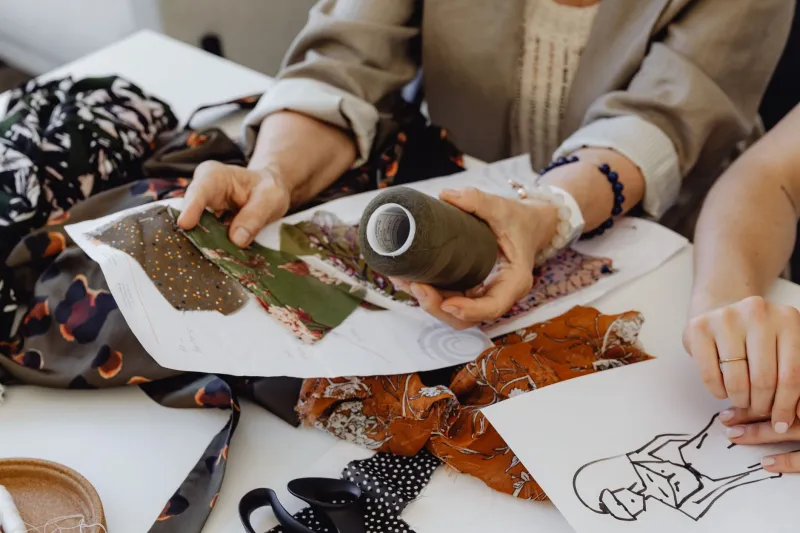
Let's set the scene. A major American clothing retailer drops a new collection. The lookbook is gorgeous — rich jewel tones, intricate geometric embroidery, layered textiles that feel ancient and intentional. The press release calls it "globally inspired." Within 48 hours, a handful of designers from the communities whose visual traditions built that entire collection are posting side-by-sides on Instagram. The comments section is a firestorm. The brand issues a vague non-apology about "celebrating world cultures." The collection sells out anyway.
This isn't a hypothetical. It's a cycle that plays out so regularly it's practically got its own release schedule.
The Difference Between a Mood Board and a History Lesson
Here's the thing that keeps getting lost in these conversations: aesthetics don't exist in a vacuum. Every pattern, color combination, motif, and silhouette that a design team "discovers" on Pinterest carries a context that predates Pinterest by centuries. The problem isn't that Western brands find non-Western design beautiful. The problem is that beauty becomes the entire transaction.
"They see the surface and stop there," says Priya Anand, a Brooklyn-based textile designer whose family roots are in Gujarat, India. "A brand will use a bandhani print — which has specific regional meaning, specific caste history, specific ritual use — and label it 'boho tie-dye.' It's not just inaccurate. It's a erasure."
That erasure is rarely accidental. It's the product of a design pipeline that rewards speed, trend-chasing, and aesthetic novelty without building in any cultural literacy checkpoints. When a creative director has six weeks to develop a capsule collection and a global mood board full of reference images, there's no structural incentive to slow down and ask where does this come from, and does the community it comes from have any say here?
The Profit Asymmetry Nobody Wants to Say Out Loud
The economics of aesthetic theft are almost obscenely straightforward. A brand profits from the cultural capital of a marginalized community's design tradition. The community itself — often still economically disadvantaged, often actively discriminated against in the same markets buying the "inspired" product — sees none of that profit and gets no credit.
Native American artists have been fighting this battle with the fashion industry for decades. The Indian Arts and Crafts Act of 1990 technically prohibits falsely marketing products as Native-made, but enforcement is inconsistent and the law doesn't cover "inspired by" framing, which brands exploit constantly. Urban Outfitters famously settled a lawsuit with the Navajo Nation in 2016 over its use of the "Navajo" brand name, but similar patterns persist across the industry under slightly different vocabulary.
"The word 'tribal' does a lot of heavy lifting for brands that don't want to be specific," notes Dr. Camille Okafor, a cultural studies professor at the University of Michigan who researches design ethics. "'Tribal print' is a phrase that homogenizes an entire continent's worth of distinct visual traditions into a single marketable aesthetic. It's intellectually lazy at best and dehumanizing at worst."
Beauty and tech aren't exempt from this critique either. Skincare brands regularly invoke Ayurvedic or Traditional Chinese Medicine concepts in product marketing — turmeric, ashwagandha, gua sha — without any meaningful engagement with the practitioners or communities who developed those systems. Tech companies have lifted Maori ta moko patterns, West African kente weaves, and Japanese sashiko stitching for everything from app interfaces to laptop skins, typically without attribution or licensing.
Appreciation vs. Exploitation: The Line Everyone Claims Is Blurry
Brands love to hide behind the appreciation-versus-appropriation debate as though it's genuinely unresolvable. It isn't. The line is actually pretty clear once you're willing to look at it honestly.
Appreciation involves relationship. It means learning, crediting, compensating, and deferring to the communities whose traditions you're engaging with. It means your "globally inspired" collection was developed with artisans from that region, not just after looking at photos of their work. It means the people whose culture you're drawing from are in the room — not as consultants brought in after the collection is already designed, but as collaborators from the jump.
Exploitation is what happens when a brand skips all of that because it's expensive and time-consuming and might complicate the aesthetic vision. It's the path of least resistance dressed up as creativity.
Some brands are doing it right, and they're worth naming. Maiyet built its entire model around direct partnerships with artisan communities in Kenya, India, and Colombia, with profit-sharing baked in. Patagonia has worked with Native American communities on specific design collaborations with explicit credit and compensation. These aren't perfect companies, but they demonstrate that the "it's too complicated" excuse is just that — an excuse.
The Trend Cycle Is Part of the Problem
Social media's relentless trend acceleration has made this worse in ways that are hard to overstate. A design element that's sacred to a specific community in, say, Oaxaca or Kyoto can go from niche reference to mainstream aesthetic trend to clearance-rack cliché in under a year. The community that originated it has no say in any stage of that journey.
"By the time a cultural aesthetic becomes a 'trend,' it's already been stripped of meaning multiple times over," Anand explains. "And then when the trend dies, the community is left with something that's been devalued and associated with fast fashion. It's a kind of cultural pollution."
TikTok and Instagram have democratized trend-spotting in ways that genuinely complicate accountability. When a creator from the originating culture shares their tradition and it goes viral, and then a brand picks it up — who's responsible? The platform? The creator? The brand? The answer is probably all three, in different ways, but the current system assigns responsibility to none of them.
What Accountability Actually Looks Like
It's not enough to call brands out in the comments. Real accountability requires structural change — in design pipelines, in legal frameworks, and in consumer behavior.
Designers like Okafor advocate for mandatory cultural consultation processes before any collection with explicit cultural references goes into production. Others argue for revenue-sharing models that automatically route a percentage of profits back to originating communities. Several Indigenous design coalitions in the US and Canada are pushing for expanded intellectual property protections that cover collective cultural ownership, not just individual authorship.
For consumers, accountability looks like asking better questions before you buy. Who made this? Where did this design come from? Is the brand transparent about that? The fact that those questions are still considered niche or inconvenient says a lot about how far the industry still has to go.
Every culture has a story to tell — and every culture has the right to tell it on its own terms. Borrowing that story without permission, without credit, and without compensation isn't inspiration. It's just a different kind of theft dressed up in a really nice lookbook.