One Routine, A Thousand Skin Tones: The K-Beauty Gap Nobody Wants to Talk About
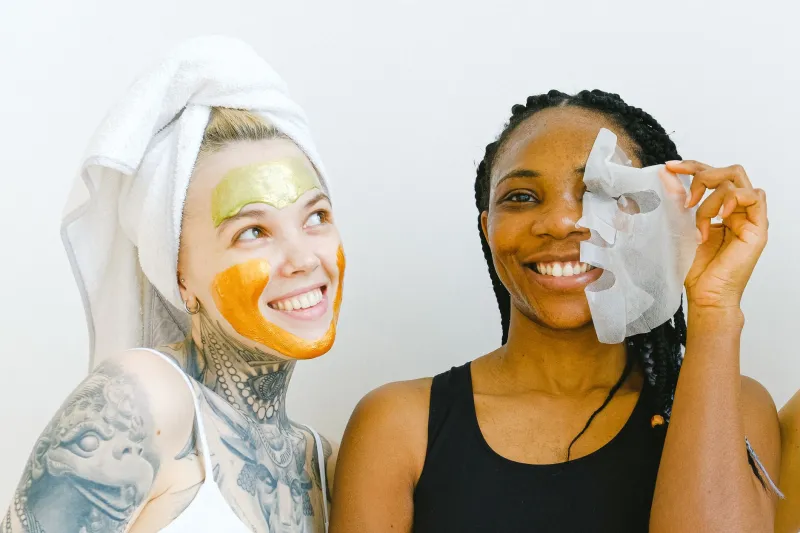
Open any beauty corner of TikTok on a given Tuesday and you'll find it: the dewy, glass-skin close-up, the satisfying pat-pat of essence, the final reveal that looks lit from within. K-beauty has fully colonized the American skincare imagination, and honestly? For good reason. The formulations are innovative, the packaging is adorable, and the philosophy — treat your skin like something worth protecting, not just painting over — resonates deeply across cultures.
But here's the part the algorithm tends to skip over: a lot of those tutorials were built with a very specific complexion in mind. And when Black, brown, Latina, and South Asian beauty lovers try to replicate the look step by step, the results can range from "slightly off" to "what is happening on my face right now."
This isn't a callout. It's a conversation that's been brewing in comment sections and group chats for years, and it's finally getting loud enough to hear.
The Science Hiding Behind the Glow
Skin tone isn't just about how light or dark your complexion appears — it's also about undertones, and undertones are where K-beauty's translation problem gets genuinely complicated.
The Korean beauty industry has historically developed products calibrated for cool-to-neutral undertones common in East Asian skin, along with a strong cultural emphasis on brightening and achieving what's often described as "whitening" or "luminous" skin. That's a loaded history on its own. But from a purely technical standpoint, it means that many K-beauty cushion foundations, BB creams, and color-correcting products were formulated with a narrower undertone range in mind.
Dr. Adaeze Okafor, a board-certified dermatologist based in Atlanta who specializes in melanin-rich skin, puts it plainly: "When you apply a product formulated for cooler, lighter undertones onto a warm or deep complexion, you're not just getting the wrong shade — you're often getting the wrong finish, the wrong absorption rate, and sometimes the wrong active ingredients for what that skin actually needs."
That dewy, translucent finish that looks ethereal on one complexion can photograph as an ashy gray cast on deeper skin tones. Niacinamide, a K-beauty staple celebrated for brightening and pore-minimizing, can actually cause flushing or irritation in some melanin-rich skin types when used in concentrations designed for other skin profiles. The routine isn't broken — it just wasn't built with everyone at the table.
The Creators Who Noticed First
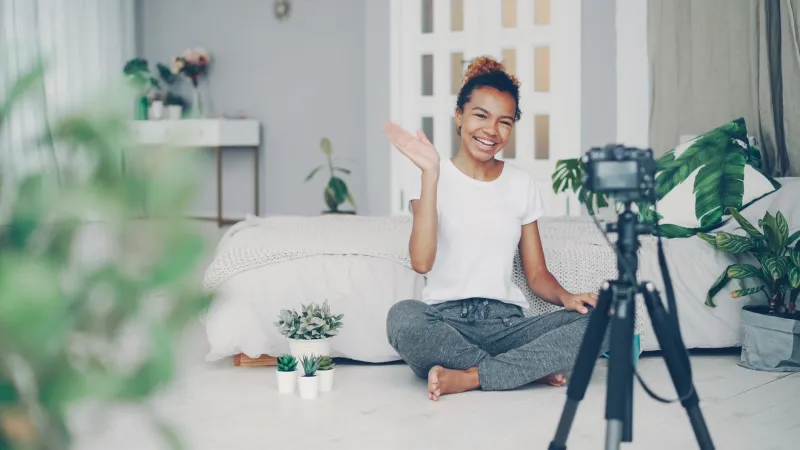
Long before brands started running diversity campaigns, beauty creators from underrepresented backgrounds were doing the actual labor of figuring out what worked and what didn't — and posting about it for free.
Naomi Adesuwa, a Nigerian-American beauty creator based in Houston with over 400,000 TikTok followers, remembers the exact moment she decided to stop trying to replicate K-beauty looks wholesale. "I bought a highly recommended essence and a cushion compact that had glowing reviews. On camera, my skin looked like I'd dusted myself in chalk. I put it in a video and the comments were full of people saying 'same.' We were all just quietly struggling."
She started a series called "Decoded for Brown Skin" where she tests viral K-beauty products and breaks down what works, what doesn't, and why — pulling in dermatology explainers alongside her own experimentation. The series blew up not because it was anti-K-beauty, but because it was honest in a space that tends to reward aspirational performance over practical truth.
That's a distinction worth sitting with. The problem was never K-beauty itself. Korean skincare culture has genuinely contributed some of the most thoughtful approaches to skin health the global beauty market has ever seen. The problem is the copy-paste assumption that one culture's beauty blueprint is universally applicable — and the industry's slow response to that reality.
The Shade Range Is Not the Whole Story
Here's where it gets nuanced. The beauty industry's go-to response to inclusion complaints is almost always to expand the shade range. More foundation shades, more concealer options, problem solved. But creators and dermatologists alike are pushing back on that limited thinking.
"Adding 10 more shades doesn't fix a formula that oxidizes orange on warm undertones, or a sunscreen that leaves a white cast, or a setting powder that emphasizes texture differently on thicker skin," says Priya Menon, a South Indian-American beauty educator based in Los Angeles who runs workshops on inclusive makeup technique. "Inclusion in beauty isn't a color palette problem. It's a formulation problem, a testing problem, and honestly, a who's-in-the-room-when-decisions-get-made problem."
Some K-beauty brands have started to listen. A handful of Korean indie brands have begun partnering with creators of color in the US market specifically to reformulate or reposition products for broader undertone compatibility. It's slow, and it's often market-driven rather than values-driven — but movement is movement.
The American beauty brands that have jumped on K-beauty aesthetics and techniques (glass skin serums, snail mucin everything, double cleansing kits) have a particular responsibility here. They're borrowing the cultural cachet of Korean beauty innovation while selling to an audience that is far more complexion-diverse than the original market context. That creates an obligation to actually do the work.
What a More Honest Beauty Internet Could Look Like
The silver lining — and there genuinely is one — is that the beauty creator ecosystem is self-correcting in real time. The comment sections are full of people sharing what worked for their specific undertone, their specific skin type, their specific climate. Community knowledge is being built in public, messily and beautifully, in ways that no brand campaign can replicate.
Creators like Naomi and Priya aren't tearing K-beauty down. They're translating it — doing the cultural and scientific interpretation work to make a genuinely innovative beauty tradition accessible to people it wasn't originally designed for. That's a form of creative labor that deserves way more recognition than it typically gets.
For American consumers navigating the K-beauty aisle at H Mart or scrolling through Soko Glam, the practical takeaway is this: the routine is a starting point, not a prescription. Your undertone, your skin's behavior in your specific climate, your melanin levels — these are variables that no viral tutorial accounts for. Finding creators who look like you and are willing to be honest about what actually lands? That's the real glow-up.
K-beauty gave the global beauty world a genuinely transformative framework. Now it's time for the conversation to catch up to the full spectrum of skin it's supposed to be serving.