Voices Across Borders: How Dubbing Went From Cheap Trick to Cultural Bridge
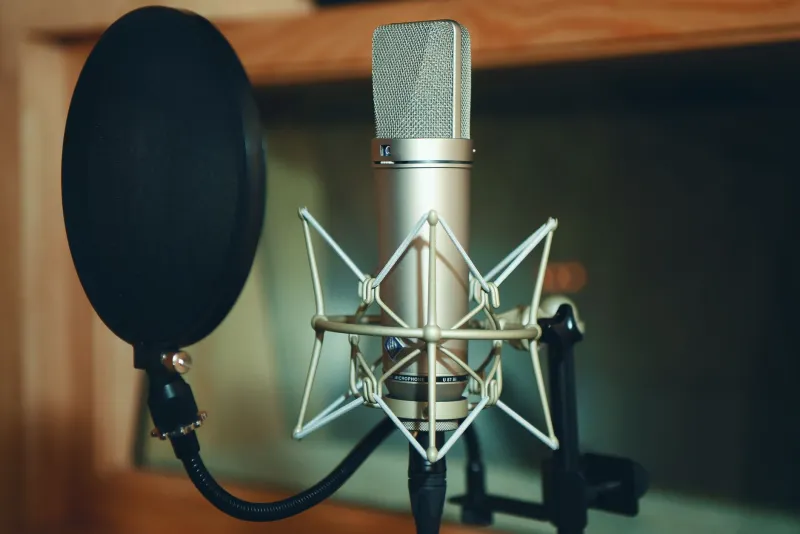
There's a moment in dubbing that the best voice actors describe almost like a spiritual handoff. You're watching an actor on screen — maybe it's Lee Jung-jae in Squid Game, maybe it's Alba Flores in Money Heist — and somewhere in a quiet recording booth in Los Angeles or New York, another performer is trying to catch the same emotional frequency. Not just the words. The weight of the words.
For a long time, that handoff was fumbled. Badly. American audiences grew up on dubbing that felt like a punishment — mouths moving slightly out of sync, dialogue stripped of nuance, performances that sounded like they were being read off a cereal box. The subtitle crowd had a point. But that was then.
Right now, dubbing is having a moment that nobody fully predicted, and it's reshaping how millions of Americans are experiencing stories from the rest of the world.
The Reputation Problem Dubbing Had to Overcome
Let's be honest about the baggage. For a long time, the default assumption among self-described cinephiles was that subtitles were the "authentic" choice and dubbing was a compromise — something for people who couldn't multitask. Online discourse made this snobbery almost into a personality trait. Bong Joon-ho's famous Golden Globes line about the "one-inch barrier of subtitles" became a rallying cry for the subtitle faithful.
But that framing always had a blind spot. Not everyone can read subtitles. People with dyslexia, low vision, cognitive processing differences, or even just a visually busy living room — they weren't choosing dubbing out of laziness. They were choosing it because it was the only way in. The subtitle orthodoxy, however well-intentioned, was quietly gatekeeping entire communities away from the international content boom.
Studios started doing the math. Netflix, Amazon, and HBO Max weren't just chasing prestige with their global acquisitions — they were chasing subscribers. And subscribers come in all kinds.
What Changed: Money, Craft, and a New Kind of Respect
The investment shift is real and it's visible. Netflix in particular began pouring significantly more resources into dubbing infrastructure around 2019 and 2020, coinciding with the explosive global growth of shows like Dark, Lupin, and eventually Squid Game. The difference in production quality between a mid-2000s dub and what's coming out of top studios today is, frankly, staggering.
Part of that is technology — better lip-sync software, cleaner audio isolation, more sophisticated post-production pipelines. But the bigger shift is human. Dubbing directors are now being brought in earlier in the localization process, sometimes working directly with translation teams to make sure adapted scripts don't just match lip movements but actually preserve the emotional architecture of the original dialogue.
"You're not translating words, you're translating intent," says one dubbing director who has worked on multiple high-profile Netflix international titles. "If a character is sarcastic in Korean, you have to find the American version of that sarcasm — not just the literal equivalent, but the version that lands the same way in the gut."
That kind of craft thinking used to be rare in dubbing. Now it's becoming the expectation.
The Unsung Performers in the Booth
Here's the part of the dubbing conversation that almost never gets covered: the voice actors themselves are extraordinary, and almost no one knows their names.
When Squid Game blew up in 2021, the discourse was almost entirely about the original Korean cast — rightfully so. But the English dub, handled by production company Iyuno, quietly earned its own admiration from a different subset of viewers. Voice actors like Trina Nishimura, known to anime fans for her work on Attack on Titan, and a generation of performers who cut their teeth in anime dubbing hubs like Funimation's Dallas studios, are now bringing that same dedication to live-action international drama.
Anime dubbing, actually, is where the American dubbing renaissance really has its roots. Companies like Funimation, Viz Media, and later Crunchyroll spent decades building a culture of voice performance that took the work seriously. Actors like Vic Mignogna, Monica Rial, and Caitlin Glass built massive fanbases. Dub vs. sub debates in anime communities were fierce precisely because both options were genuinely good. That culture of craft has migrated upstream into prestige live-action dubbing in ways the industry is only beginning to fully recognize.
Who's Actually Watching Dubbed Content?
The demographics here are genuinely surprising. Research from multiple streaming platforms has pointed to dubbing being disproportionately popular among younger viewers — which cuts directly against the assumption that Gen Z, raised on subtitled anime and YouTube, would default to the original audio. Turns out, when dubbing is good, the generation that grew up watching dubbed Naruto doesn't have an ideological objection to it.
Latino and Hispanic American audiences are another major factor. Spanish-language dubbing has always been a sophisticated industry — telenovelas, dubbed Hollywood films, and decades of Latin American voice acting talent mean that the infrastructure and the audience expectation for quality dubbing is deeply embedded. As platforms expand their Spanish-language dubbing for shows originally in Korean, French, or German, they're tapping into a viewer base that never had the subtitle-versus-dub debate in the first place. They just want great content, accessibly delivered.
There's also the living room factor. Subtitled content demands a certain kind of viewing — focused, screen-forward, undistracted. Dubbed content can fill a kitchen, a commute on a tablet propped against a coffee cup, a couch full of family members with varying attention spans. That's not a lesser form of engagement. It's just a different one.
The Cultural Fidelity Question
The most interesting ongoing debate in the dubbing world isn't about quality anymore — it's about authenticity. When you dub a show, you're inevitably making cultural translation choices. Do you keep honorifics from Japanese? Do you localize Korean slang into American slang, or find something neutral? Do you cast voice actors who phonetically match the ethnicity of the original performers?
This last question has gotten real attention recently. Advocacy from within the voice acting community has pushed for more intentional casting in dubbed content — not just matching vocal tone, but thinking about whether it's appropriate to cast a white voice actor to dub a Black or Asian lead. It's a conversation the industry is having out loud now, which is itself a sign of how seriously dubbing is being taken as a cultural product rather than just a technical afterthought.
The best dubbing directors will tell you that the goal isn't to erase where a show comes from — it's to build a door wide enough for more people to walk through. The Korean-ness of Squid Game, the Parisian texture of Lupin, the Spanish working-class grit of Money Heist — none of that should disappear in translation. It should just become audible to people who couldn't access it before.
The Booth Is the Bridge
Maalamalama exists on a pretty simple premise: every culture has a story worth telling, and the telling matters. Dubbing, at its best, is one of the most literal expressions of that idea. It's a room full of performers trying to honor someone else's story well enough to hand it to a whole new audience.
The subtitle crowd isn't wrong that something intimate exists in original audio — the specific timbre of an actor's voice, the untranslatable rhythm of a language. But the dubbing booth, when it's doing its job right, is also doing something remarkable. It's saying: this story is for you, too.
And in a media landscape still figuring out how to make global content genuinely global, that's not a small thing. That's the whole point.