Press Start on This: How Global Streamers Are Rewriting America's Entertainment Playbook

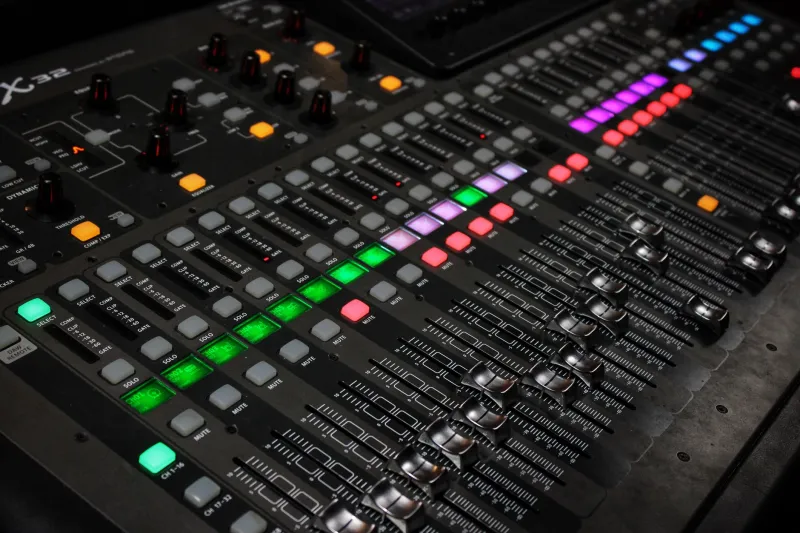
Photo by Photo by Branden Skeli on Unsplash on Unsplash
For most of the twentieth century, American entertainment traveled in one direction: outward. Hollywood exported its stars, its stories, its slang. The rest of the world watched. Then the internet arrived, flattened the distribution hierarchy, and handed a webcam to a nineteen-year-old in Busan who was very, very good at League of Legends. And suddenly the whole thing reversed.
Right now, some of the most-followed entertainers among American Gen Z and millennial audiences are not from Los Angeles or New York. They're from Seoul, Hyderabad, Bogotá, and São Paulo — and they're building fanbases that cut across every demographic line the entertainment industry used to rely on to predict who would watch what.
The Leaderboard Doesn't Lie
Let's talk numbers for a second, because they're genuinely wild. Korean esports organization T1 — home of legendary League of Legends player Faker — regularly pulls viewership numbers that rival mid-tier cable sports broadcasts in the US. Indian streamer and content creator Mortal (Naman Mathur) has amassed millions of followers across platforms, with a fanbase that includes substantial American audiences who found him through competitive BGMI and Free Fire content. Latin American streamers like TheGrefg and Ibai Llanos have hosted events — including a boxing match and a virtual music concert — that shattered Twitch viewership records.
These aren't niche numbers. These are mainstream entertainment numbers. And American audiences are showing up not despite the cultural and linguistic differences, but sometimes because of them.
Why Americans Are Tuning In
Here's the thing about gaming as a cultural bridge: the game itself is a shared language. When a Korean streamer is clutching a 1v4 in Valorant, you don't need to speak Korean to feel the tension. The mechanics are universal. The emotions are universal. What the international streamer brings on top of that — their humor, their way of reacting, their slang, the music playing in the background, the food they're eating on camera — that's the texture that makes a stream feel like a place rather than just a broadcast.
American viewers, particularly younger ones, are increasingly drawn to that texture. They're not just watching gameplay; they're absorbing culture. They're picking up Korean phrases from their favorite streamer's catchphrases. They're curious about the snacks being reviewed on camera. They're following the K-pop songs playing in the background back to their source. Gaming streams have become, for many American Gen Z viewers, one of the most organic entry points into global culture — more accessible than a documentary, more immersive than a Wikipedia rabbit hole.
"My American fans know more about certain Korean slang than some Koreans," jokes one streamer in a fan Q&A clip that went viral on Reddit's r/LivestreamFail earlier this year. The comments were full of Americans proudly confirming this.
The Hybrid Fanbase Phenomenon
What's particularly fascinating — and what the entertainment industry is only beginning to wrap its head around — is the composition of these international streamers' American fanbases. They're not monolithic. They're not just Korean-American kids watching Korean streamers or Indian-American audiences supporting Indian creators. The fanbases are genuinely mixed.
This is the hybrid fanbase phenomenon, and it's reshaping how brands and networks think about audience segmentation. The old model — identify a demographic, target content to them, build a monoculture — doesn't describe what's happening on Twitch and YouTube Gaming right now. What's happening instead is interest-first community building, where a shared love of a game or a streamer's personality creates a community that then becomes curious about each other's backgrounds.
Merchandise drops for Latin American streamers sell out in the US within hours — not just to Latino fans but to anyone who's spent enough time in that creator's community to feel like a regular. That's a new kind of parasocial relationship, one built across cultural lines rather than along them.
The Business Is Catching Up
Brands are noticing. Slowly, awkwardly, but genuinely. Sponsorship deals that used to default to English-language American streamers are increasingly being offered to international creators with proven US audience penetration. Energy drink companies, gaming peripheral brands, and fast food chains have all run campaigns in the last two years featuring streamers whose primary language isn't English but whose American reach is undeniable.
The esports organization model is evolving too. Teams like T1, Gen.G, and LOUD (Brazil) have made deliberate investments in English-language content creation and cross-cultural marketing to expand their American footprints. Gen.G in particular has been aggressive about building a presence in US esports culture while centering its Korean identity rather than diluting it — a bet that appears to be paying off.
For individual streamers, the business opportunity in the American market is significant enough that many are now hiring English-language community managers, adding subtitles to VODs, and scheduling streams to overlap with US prime time. They're not abandoning their home audiences — they're expanding the room.
The Culture Flows Both Ways
What makes this moment genuinely exciting from a cultural standpoint is its reciprocity. American gaming culture — its memes, its slang, its content formats — has influenced international streamers just as those streamers are influencing American audiences. The result is a genuinely hybrid global gaming culture that doesn't belong to any one country.
You can see it in the content itself: a Brazilian streamer using a distinctly American-style reaction format while commentating in Portuguese with Korean gaming terminology mixed in, broadcasting to a chat full of people from six continents. That's not dilution — that's evolution. That's what culture does when it has room to move.
For American entertainment, the implications are significant. The idea that audiences need to see themselves reflected in order to connect — true and important as it is — is being complicated by a generation that has grown up connecting across difference as a default setting. They don't need a streamer to look like them or sound like them. They need a streamer to be genuinely themselves.
As it turns out, that's a universal language too. And the leaderboard is full of people who figured that out before Hollywood did.
Game on.