Rang De Broadway: The South Asian Theater Wave Changing What American Stages Look Like
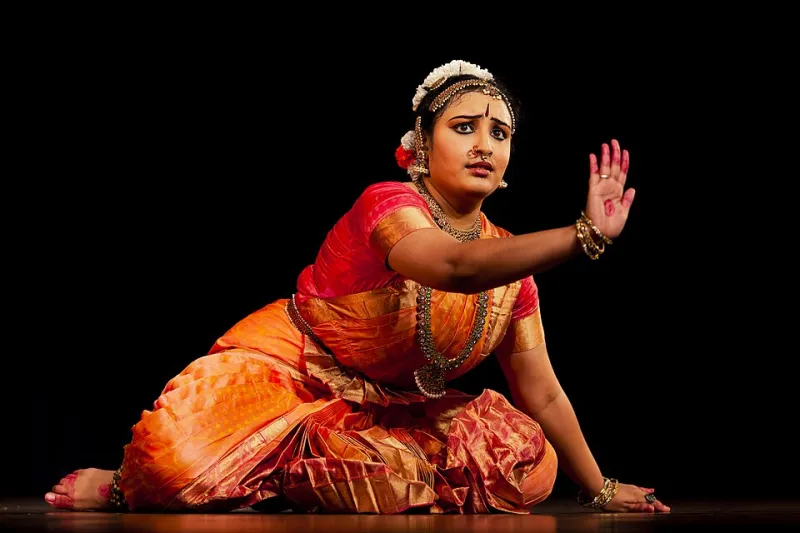
Photo: Vijay Sundararaman Iyer, CC BY-SA 4.0, via Wikimedia Commons
There's a moment in a great piece of theater when the audience stops watching and starts feeling. For a growing number of American theatergoers, that moment is arriving wrapped in the rhythms of a classical raga, the swirl of a ghagra choli, or the emotional gut-punch of a story rooted in Partition, migration, or a Mumbai monsoon. South Asian theatrical traditions are no longer a niche curiosity on American stages — they're becoming part of the main event.
And honestly? It's been a long time coming.
The Roots Run Deeper Than You Think
Before we talk about what's happening on 45th Street, it helps to understand what's actually being brought to the table. Indian theatrical tradition is ancient and wildly diverse. We're talking about Kathakali, the visually stunning classical dance-drama form from Kerala with its elaborate makeup and hand gestures that tell entire epics. There's Yakshagana from Karnataka, Tamasha from Maharashtra, and the 2,000-year-old Sanskrit dramatic tradition codified in the Natyashastra — essentially the world's oldest surviving manual on performance theory.
That's not just cultural flavor. That's a deep, sophisticated well of storytelling technique that Western theater is only beginning to tap seriously.
When directors and choreographers who grew up watching these forms start working in American productions, they don't just bring aesthetic choices — they bring entirely different philosophies about how bodies move through space, how music and emotion are intertwined, and how audiences are meant to participate in a story.
Broadway Is Paying Attention
You don't have to look hard to find the fingerprints. Productions like Hadestown — the Anaïs Mitchell-penned mythological musical that swept the Tonys — have quietly incorporated movement vocabularies and rhythmic structures that theater scholars have noted align with South Asian classical traditions, particularly in how the ensemble functions as a kind of Greek chorus reimagined through a more communal, almost devotional lens.
Then there's Six, the pop-history sensation about Henry VIII's wives, which has featured South Asian performers in principal roles and incorporated costuming that draws from a global fashion vocabulary. These aren't tokenistic gestures — they reflect a broader creative philosophy that says storytelling doesn't belong to any one culture.
But the more direct influences are happening off-Broadway and in the regional theater circuit, where South Asian American playwrights and directors are building the pipeline. Writers like Madhuri Shekar, whose play A Nice Indian Boy became a sleeper hit in regional productions, and Ayad Akhtar, whose Pulitzer Prize-winning Disgraced cracked open American conversations about Muslim identity, are proof that South Asian narratives don't need to be explained or exoticized to land with American audiences. They just need to be told well.
The Music Is the Message
If there's one element of South Asian theatrical tradition that's making the biggest cultural dent right now, it's the music. The integration of Indian classical and folk music into contemporary American productions isn't just a vibe choice — it's a structural revolution.
Classical Indian music operates on a fundamentally different emotional architecture than Western scales. The raga system, where specific melodic frameworks are associated with particular times of day, seasons, and emotional states, offers composers a whole new toolkit. When you hear a production that incorporates these elements thoughtfully, it hits differently. There's a reason Anoushka Shankar's collaborations with Western orchestras routinely leave audiences in tears.
Choreographers trained in Bharatanatyam — the classical South Indian dance form known for its precise footwork, expressive hand gestures (mudras), and storytelling through facial expression (abhinaya) — are bringing a level of physical specificity to Broadway dance that's genuinely expanding what American audiences think movement can do.
The Performers Rewriting the Playbook
Talk to South Asian American performers working in this space and you'll hear a consistent theme: the industry is changing, but not without friction.
For years, the conversation was about getting in the room at all. Now, increasingly, it's about being in the room on your own terms — not being asked to sand down your cultural specificity to fit a mold, but bringing the full breadth of your artistic inheritance into the work.
That shift is visible in casting conversations, in the growing number of South Asian American directors working on major productions, and in the audience demographics shifting in real time. The South Asian diaspora in the US is enormous — over 5 million people — and they are hungry for stories that reflect their complexity. When those stories land on major stages, they don't just bring their own communities. They bring everyone else, too.
What American Audiences Are Actually Hungry For
Here's the thing about American theatergoers in 2024: they've been through a lot. A pandemic, a reckoning with whose stories get told, a generational shift in who's buying tickets. What's emerged on the other side is an audience that's genuinely more curious, more open, and more willing to sit with unfamiliar forms.
Shows that blend classical Indian aesthetics with contemporary American themes aren't niche anymore — they're a genuine market. Productions that might have been considered "too cultural" a decade ago are selling out. Regional theaters in cities like Chicago, Houston, and Los Angeles — all home to significant South Asian communities — are reporting some of their strongest attendance numbers on exactly these kinds of cross-cultural productions.
The appetite is there. The talent is there. The traditions are there, ancient and alive and ready.
The Story Is Just Getting Started
What's happening on American stages right now isn't a trend. It's a correction — a long-overdue recognition that the story of American theater has always been a story of cultural collision and synthesis. Jazz came from the African American experience and changed popular music forever. The Jewish immigrant experience shaped the golden age of Broadway musicals. Now South Asian traditions, carried by a diaspora that spans generations and geographies, are adding their voice to that ongoing conversation.
And if you've ever watched a Kathakali performance and felt your entire nervous system recalibrate, you already know: when these traditions get the platform they deserve, something extraordinary happens.
The lights are going up. The tabla is warming up. Get to the theater.