The Recipe Is a Love Letter: Why Food Memoirs Are Becoming the Most Honest Books in America
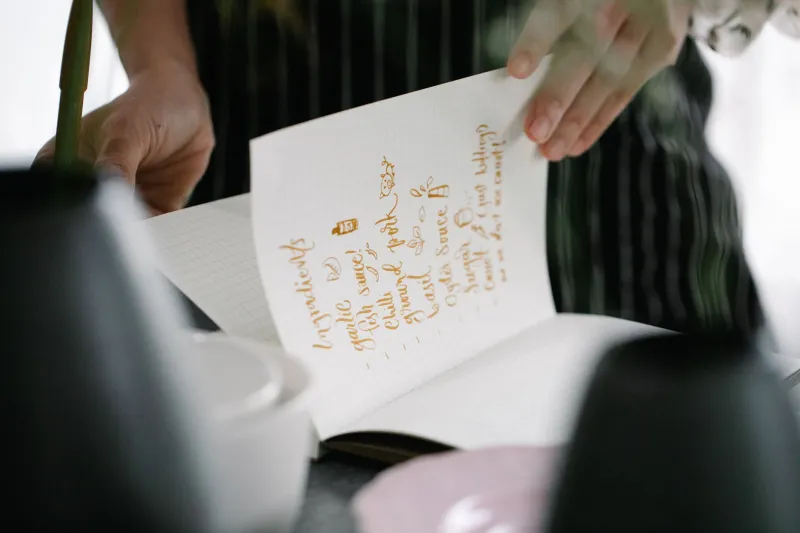
Somewhere between the instructions for how long to knead the dough and the memory of a grandmother's hands doing it, something extraordinary happens on the page. The food memoir — part recipe collection, part personal essay, part cultural excavation — has quietly become one of the most emotionally honest literary forms of our moment. And the writers driving this wave are using the kitchen as a way to say things that no other room in the house would allow.
A New Kind of Immigrant Story
For a long time, the immigrant narrative in American literature followed a fairly predictable arc: arrival, struggle, assimilation, arrival at some version of the American dream. Triumphant or tragic, the story was usually told in a straight line. What contemporary food memoirists are doing is something messier, more circular, and considerably more true.
Books like In Bibi's Kitchen by Hawa Hassan, More Than Enough by Elaine Welteroth, and Nik Sharma's The Flavor Equation — to name just a few from a suddenly crowded and vibrant shelf — approach cultural identity not as a destination but as an ongoing negotiation. The food is never just food. It's the argument your parents had about whether to keep making the old dishes. It's the smell that made you feel like yourself in a country that kept asking you to be someone else. It's the thing you took for granted until you couldn't get the ingredients anymore.
These writers aren't interested in tidy resolutions. They're interested in the complexity of loving a culture that the dominant society has sometimes treated as less-than, of craving a dish that you've also been mocked for eating, of inheriting a culinary tradition that carries both joy and generational pain in the same pot.
The Essay as Recipe, The Recipe as Essay
One of the most formally interesting things about this wave of food writing is how it's blurring the line between literary essay and practical instruction. Writers like Samin Nosrat (Salt, Fat, Acid, Heat) and Yewande Komolafe (whose New York Times work has been widely celebrated) treat the act of explaining a recipe as an act of storytelling — and vice versa.
Komolafe, who immigrated from Nigeria to the United States, has written about her mother's cooking in ways that are simultaneously instructional and deeply elegiac. The measurements matter. So does the grief. The form insists that you hold both at once, which turns out to be a remarkably accurate representation of what it actually feels like to cook your family's food in a kitchen that is not your family's kitchen.
This structural innovation isn't just aesthetically interesting — it's politically meaningful. By treating a recipe as worthy of the same literary attention as a personal essay, these writers are making an argument about whose knowledge counts as knowledge, whose traditions count as culture. In a country that has long had a complicated relationship with valuing the contributions of immigrant and non-white communities, that argument lands.
Reclamation on the Page
The word "reclamation" comes up frequently in conversations about this genre, and it's worth sitting with what that actually means in practice. For many of these writers, the act of documenting family food traditions is explicitly an act of resistance against erasure.
Assimilation pressure in America has historically included a culinary dimension. Immigrant families were encouraged — sometimes subtly, sometimes not — to abandon the foods that marked them as foreign, to replace the unfamiliar smells and textures with something more legible to mainstream American culture. The food memoir, at its most powerful, is a direct response to that pressure: a declaration that what was nearly lost is worth recovering, worth writing down, worth sharing with anyone willing to read.
For writers from communities whose culinary traditions have been appropriated without credit — flavors that ended up in trendy restaurants with no acknowledgment of their origins — the act of authorship carries additional weight. Putting your name on your grandmother's recipe is a form of documentation. It says: this came from somewhere specific, from someone specific, and that specificity matters.
What These Books Are Teaching Readers to Do
One of the more quietly radical things about the best food memoirs is that they invite readers to become writers themselves. The implicit message in so many of these books is: your family's kitchen holds stories worth telling, too.
If you're feeling moved to start documenting your own culinary heritage, the writers in this genre offer a useful template. Begin not with the recipe but with a memory — a specific moment, a specific person, a specific sensory detail. What did the kitchen smell like? Who was standing at the stove? What were they talking about while they cooked? Let the recipe emerge from the story rather than the other way around.
Oral history methods work beautifully here. Record your relatives talking about food — not interviewing them formally, but cooking with them while your phone sits quietly on the counter. Ask about substitutions: what did they use when they couldn't get the right ingredient? Those substitutions are often where the most interesting stories live, because they're the places where necessity forced creativity, where a new country got folded into an old tradition.
And don't worry about making it perfect. The roughness, the uncertainty, the moments where the memory doesn't quite match the recipe — those are features, not bugs. The best food memoirs read the way real memory works: associatively, imperfectly, with sudden moments of startling clarity.
The Shelf Worth Building
If you're new to this genre and want to start somewhere, a few books have become genuine touchstones. Crying in H Mart by Michelle Zauner is perhaps the most widely read recent entry — a devastatingly beautiful memoir about grief, Korean food, and what it means to inherit a culture through cooking. Soleil Ho's food criticism, much of it available online, brings a sharp analytical intelligence to questions of authenticity and cultural ownership. And My America: Recipes from a Young Black Chef by Kwame Onwuachi is as much a meditation on identity and belonging as it is a cookbook.
These books, taken together, represent something genuinely new in American literary culture: a chorus of voices insisting that the table is a place of consequence, that what we cook and eat and remember is not trivial, and that the stories living in our kitchens deserve exactly as much attention as any other stories we tell about who we are.
The recipe is a love letter. It just took the right writers to help us read it.